
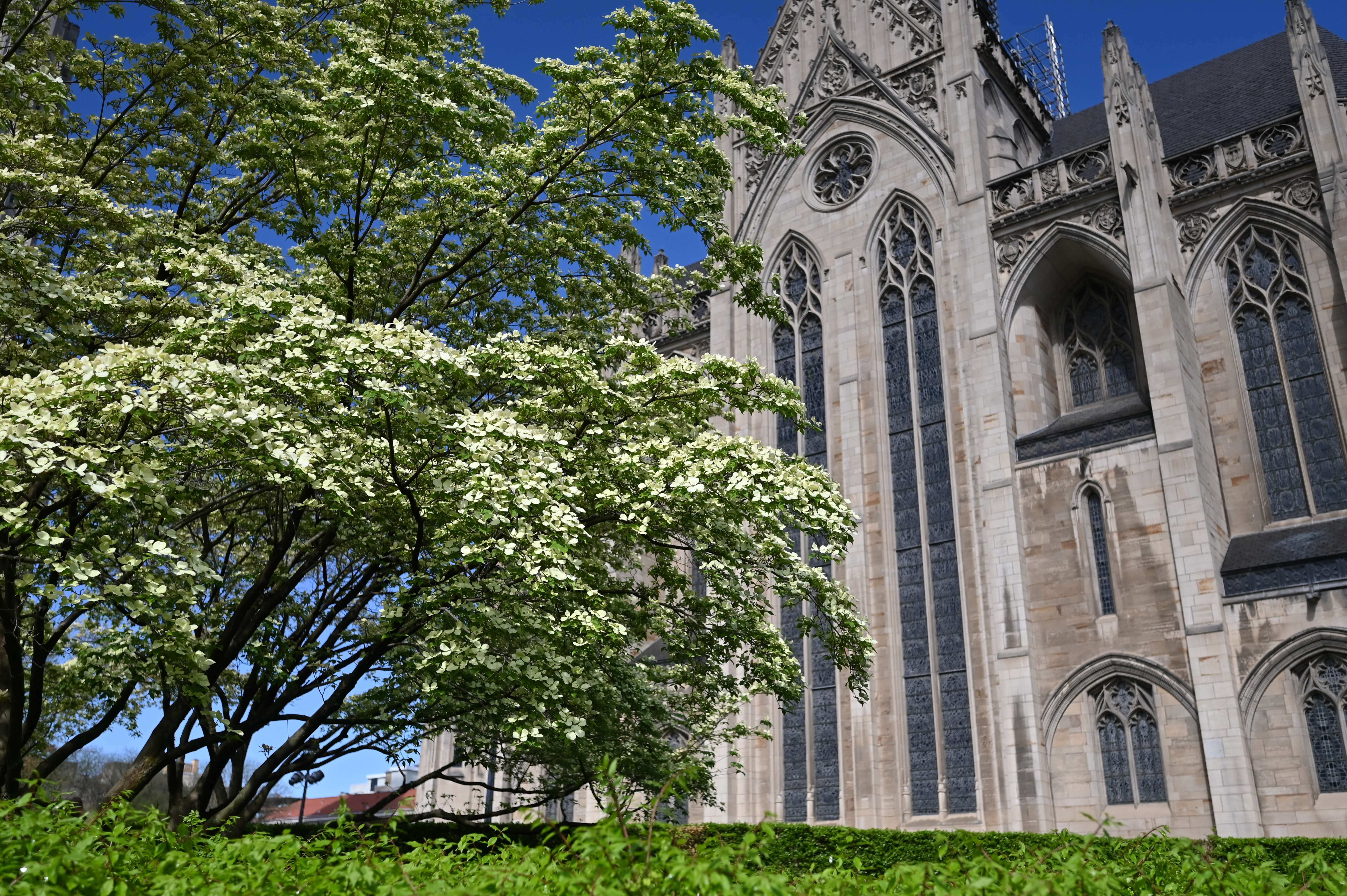
When Charles Connick designed the 23 stained glass windows that fill Heinz Chapel with color, depicting 391 figures drawn from history, literature, music, science, and faith, he incorporated recycled glass among the 250,000 individual pieces of glass used throughout the Chapel. That was decades before "sustainability" was a word anyone used on a college campus. It turns out the instinct to make something beautiful last was there from the beginning.
That instinct still guides us. Caring for a nearly century-old chapel means choosing restoration over replacement, thoughtfulness over waste, and stewardship over convenience for everyone who walks through these doors long after we're gone.
By the Numbers
23Stained glass windows | 700Copper panels restored & returned to original spire | 2025Pitt Sustainability Group Award | 2038100th Anniversary |

Weddings & Events
Sustainability at the Chapel isn’t a premium add-on or a package upgrade. Our "Unplugged Ceremony" signage and vase-reuse partnerships with local florists cut waste without cutting elegance, and our AV equipment runs on rechargeable batteries, not disposables. A recent multi-day zero waste audit found we produce a fraction of the waste a typical wedding venue creates.
Landscape & Habitat
The grounds surrounding the Chapel are maintained under Pitt's Sustainable Landscape Guidelines, which call for organic land care practices and growing the campus tree canopy through 2037. The Chapel's grounds are even a stop on Pitt's Campus Tree Trek, a self-guided tour of notable trees across campus.
Energy & Stewardship
Because Heinz Chapel is a historic building — thick stone, high ceilings, and nearly a century of original glass — efficiency improvements take real engineering, not a quick fix. We recently completed an in-depth energy audit to understand exactly where the opportunities are, and every next step is weighed against the building's preservation needs, not just its utility bills. That includes lighting upgrades that pair energy savings with the character of a historic space, along with continued efficiency work throughout the building. Our recent spire restoration is part of this same commitment – read more about that work below.

Culture & Recognition
For our small team, sustainability is just part of the job. The staff who plan and coordinate your event complete ongoing sustainability training, and Chapel staff serve on a department sustainability working group alongside a university sustainability manager.
We also aren’t doing this alone. The Chapel operates under the Pitt Sustainability Plan and the University’s Climate Action Plan, which means these commitments are written into how the University runs. We can pull in people and programs from across campus that most venues don't have accessible. We’ve earned Pitt’s highest Green Office designation, Sustainable Oak, and won Pitt’s 2025 Group Sustainability Award.
Pollinators in the Light
Each June, Heinz Chapel partners with Pitt Sustainability to celebrate National Pollinator Month with a guided tour unlike any other on campus. We trace pollinators across three parts of the Chapel: the English garden just outside, the flora and fauna depicted throughout 23 stained glass windows, and even the decorative details carved in oak and stone . It's a chance to see the Chapel the way Charles Connick and the Chapel’s builders saw the natural world: as something worth representing carefully, because it's worth preserving.
A Lifetime of Work: Built to Last, On Purpose
The spire above the Chapel isn't just a backdrop for photos — it rises 124 feet from its base, 256 feet above the ground, and it's now the product of a three-year restoration that returned all 700 of its original copper panels to their exact original place, each one individually removed, documented, repaired, and reinstalled, rather than replaced with something new. One of the original carved grotesques was too damaged to place back on the spire; it’s maintained as a historic piece of artistry. The project came under its $11.5 million budget, and the Chapel remained open for weddings, worship services, and all events throughout the work.
The same care is already turning toward what’s next: restoration of the stained-glass windows and limestone facade couples and visitors are photographed in front of every week. Caring for this building isn't a one-time project — it's a permanent one, so it remains an architectural gem, preserved for future generations who enter through its iconic red doors.
Support the next phase of preservation by making a donation.
At its 1938 dedication, Howard Heinz hoped this Chapel would help everyone who entered "face life with new courage and restored faith." Caring for the building itself — its glass, its stone, its garden — is part of how we keep that hope alive for the next century of students, couples, and visitors.
The spire is restored, but the work isn't finished. Future considerations include the limestone facade, stained glass windows, oak woodwork, lighting upgrades, and other building efficiency improvements. Your gifts to the Chapel go directly toward those projects as we look forward to the the 100th anniversary of the Chapel’s dedication in 2038