
The University of Pittsburgh strives for responsible consumption of both potable and nonpotable water on-campus. Specific Pitt Sustainability Plan goals include:
- Strive toward a water neutral campus, with a 3% reduction in water use by 2020 from 2017 baseline. (Achieved in 2020)
- Embrace Pittsburgh 2030 District goals of 50% reduction below the district average in water use intensity (consumption per square foot) by 2030 and establish design standards and operational practices to achieve them.
Low flow plumbing fixtures are installed and being upgraded across campus in support of Pitt’s goal to reduce water use intensity 50% by 2030.
Water Quality
The University of Pittsburgh is committed to a safe and healthy campus, including ensuring clean drinking water for everyone in the community. Pitt’s Environmental Health and Safety department and Office of Facilities Management proactively test and monitor water quality in Pittsburgh campus buildings. The University follows national testing protocols and uses a third-party laboratory for drinking water testing, including monitoring for heavy metals (e.g., lead).
In 2025, Pittsburgh Water achieved its lowest ever lead levels, far outperforming local, state, and federal standards.
Water to Pitt’s Pittsburgh campus is supplies by the Pittsburgh Water and Sewer Authority (PWSA). Information on Pittsburgh’s water quality can be found on PWSA’s water quality reports and community lead response information pages.
Stormwater
With climate change heavier and more frequent storms hitting our region, intense rains are overwhelming our current infrastructure. This makes stormwater management a growing concern throughout Pittsburgh.
Pitt is dedicated to stormwater management practices to help protect our local water ways from sewage overflows and preventing flooding. By 2030 Pitt will reduce impervious surfaces by 20% from 2017 baseline and divert 25% of stormwater from remaining surfaces to rain gardens, bioswales, or rainwater harvesting tanks.
Pittsburgh has a combined sewer system which collects rainwater runoff, domestic sewage, and industry wastewater into a single pipe. When heavy rainfalls occur the volume of water can overwhelm the system causing untreated stormwater and wastewater to bypass treatment plants and be discharged directly into waterways.
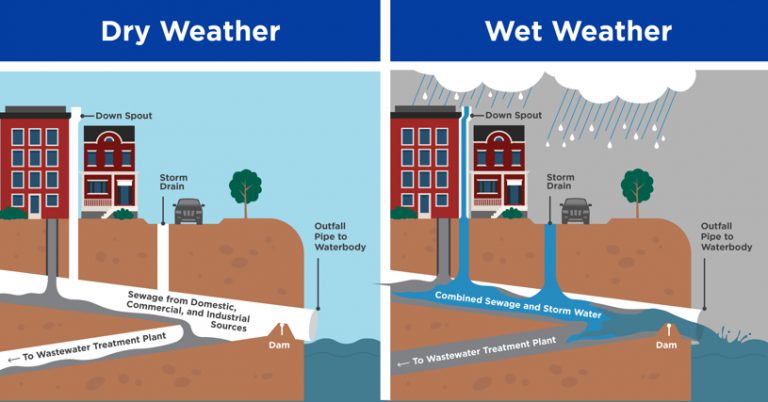
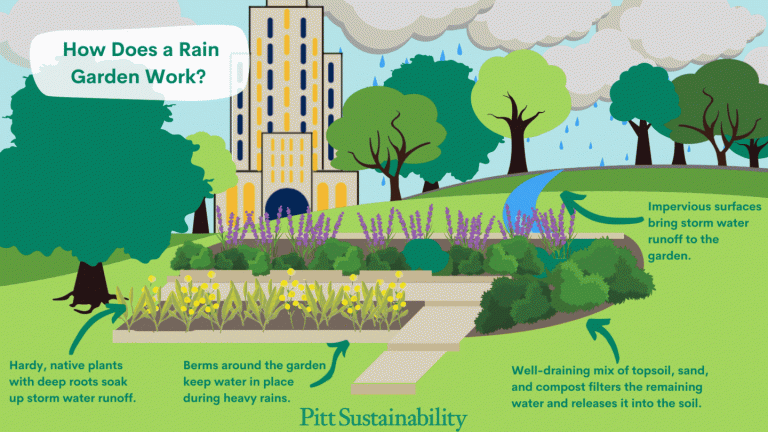
Pitt is dedicated to growing green stormwater infrastructure on campus. Pitt has 10 rain gardens and 9 green roofs on campus that detain and absorb excess rainwater, enabling it to naturally infiltrate into and nourish the soil, while helping mitigate Pittsburgh’s combined sewer overflow (CSO) issues.
Rain Gardens
- Bigelow Boulevard – features a series of rain gardens.
- Cathedral Rain Garden – Is very visible, located on the Cathedral lawn between Heinz Chapel and the log cabin.
- Petersen Events Center Rain Garden – Includes 4 rain gardens, 1 of which was the University’s first rain garden which came to fruition form ideas initiated by students; it now also hosts a solitary bee house.
- Salk Hall Annex Rain Gardens (2)
- Scaife Hall - Cascading stormwater management feature planted with native species along Lothrop Street. (2023)
- Sutherland Hall Rain Garden
Green Roofs
- Green Roofs: Benedum Hall and Falk School
- Pollinator Patios: Barco Law, Hillman Library, Nordenberg Hall, and Posvar Hall
- Partial Roof Plantings: Forbes Hall, Posvar Hall, Schenley Quad
Rainwater Reuse
The University of Pittsburgh’s draft stormwater master plan is complete and under internal review. This plan identifies major rainwater capture, storage, and reuse initiatives.
The University of Pittsburgh has a large cross-campus rainwater capture and reuse system in various stages of design, construction, and operation. This system captures and reuses treated rainwater as make-up water at two central utility plants.
In 2024, Phase 1 of the rainwater reuse system became operational at the Upper Campus Central Utility Building (CUB) project. A 250,000 gallon underground cistern adjacent to the building captures rainwater from the roof of the CUB. Additional cisterns at the Recreation & Wellness Center and Arena & Sports Performance Center are networked with the CUB underground to reuse more captured rainwater on upper campus.
Phase 2 of the campus-wide rainwater reuse network included a 250,000 gallon cistern under Mazeroski Field that is connected to the Posvar Hall Chilled Water Plant. Captured rainwater from the roof of Hillman Library is also used by the Posvar plant.
Distribution piping under Bigelow Boulevard supports connection of the campus-wide rainwater reuse network.
The City of Pittsburgh’s combined sewer overflow (CSO) system is under consent decree with the U.S. Environmental Protection Agency, requiring action. The University’s rainwater reuse system, rain gardens, and other stormwater efforts lessen the burden on both our local combined sewer system and potable water infrastructure.
Since 2001, the University of Pittsburgh has also used underground aquifer water (tapped into during the construction of Sennott Square) to water planted areas and hanging baskets around campus that require irrigation. in 2001, and designers took advantage of this by installing an access point to collect the water for use on campus. This Pittsburgh aquifer runs from Herron Hill to Schenley Park; the use of this untreated water to help sustain ecological systems reduces the amount of municipal water consumed and has a lower impact on the environment.