
Butterfly Bend

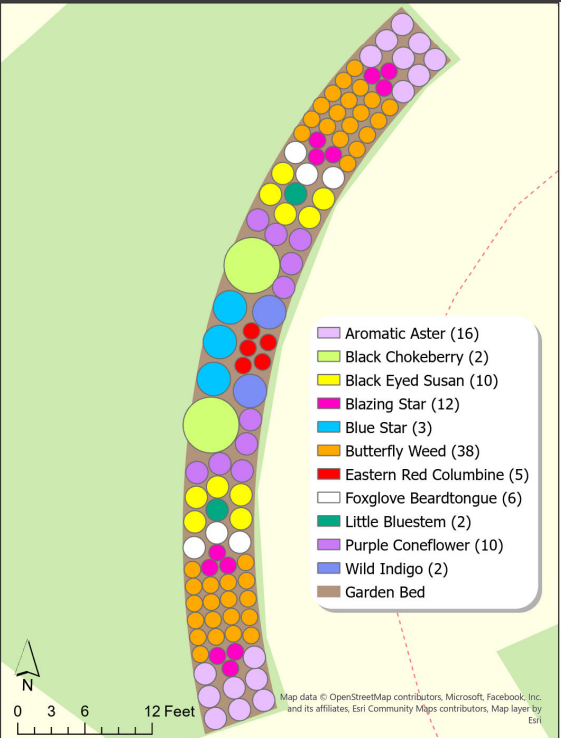
Map of Butterfly Bend plantings

Where?

Outside of Wesley W. Posvar Hall, on the Bouquet Gardens side.

Types of Plants

  • Aromatic Aster
  • Black Chokeberry
  • Black Eyed Susan
  • Blazing Star
  • Butterfly Weed
  • Eastern Red Columbine
  • Foxglove Beardtongue
  • Little Bluestem
  • Purple Coneflower
  • Wild Indigo
Butterfly Bend Plants
Aromatic Aster
Aromatic Aster

The aromatic aster (Symphyotrichum oblongifolium) is a native North American perennial wildflower known for its late-season, daisy-like flowers and fragrant foliage. 

Black Chokeberry
Black Chokeberry

Black chokeberry (Aronia melanocarpa) is a deciduous shrub native to eastern North America, known for its deep-purple, antioxidant-rich fruit. 

Black Eyed Susan
Black Eye Susan

Black-eyed Susan is a genus of North American native flowering plants in the daisy family (Asteraceae), best known for their daisy-like flowers with dark central cones.

Blazing Star
Blazing Star

A blazing star is a wildflower of the genus Liatris, also known as gayfeather. They are native to North American prairies and meadows. 

Bluestar
Bluestar

Amsonia, commonly known as bluestar, is a genus of North American native perennial plants prized for their delicate, star-shaped flowers and attractive foliage that turns golden-yellow in the fall.

Butterfly Weed
Butterfly Weed

Butterfly weed (Asclepiastuberosa), also known as butterfly milkweed, is a perennial wildflower valued for its vibrant orange flowers and its crucial role in supporting monarch butterflies

Eastern Red Columbine

Eastern red columbine (Aquilegia canadensis) is a native North American perennial wildflower known for its delicate, nodding red and yellow flowers. 

Foxglove Beardtongue

Foxglove beardtongue (Penstemon digitalis) is a perennial herb native to eastern and central North America.

Little Bluestem
Little Bluestem

Little bluestem (Schizachyriumscoparium) is a native North American prairie grass prized for its seasonal color changes and ecological benefits. 

Purple Coneflower
Purple Coneflower

The purple coneflower (Echinacea purpurea) is a hardy, native North American perennial known for its striking, daisy-like flowers with a prominent central cone. 

Wild Indigo
Wild Indigo

Wild indigo, also known as false indigo, refers to the genus Baptisia, a group of long-lived, North American perennial plants. 

Who planted the garden?

Students in GEOL 1333: Sustainability this term founded the team Bloom Service, whose mission is to increase native plant and pollinator biodiversity on Pitt’s campus. These students worked closely with Andy Moran, Senior Manager of Grounds, and the rest of the Pitt Grounds Department to plan and design Butterfly Bend. Upon receiving a grant from the Pitt Green Fund, Bloom Service was able to start planting a variety of pollinator-friendly plants, right outside of Posvar Hall.

Hands putting a plan in the ground

Students next to Butterfly Bend Garden  Student shoveling mulch from a pickup truck