
Landscape & Ecology

Pollinators

Pollinators take many forms including insects, bats, and birds. The University of Pittsburgh recognizes how crucial local pollinators are for supporting our ecosystems and food systems. We strive to protect existing pollinators and to create spaces on campus where pollinator communities can grow and thrive. 

Pollinator-Friendly Policies

As part of our Landscape & Ecology goals in the Pitt Sustainability Plan, we are committed to maintaining and growing tree count and canopy on campus by 2037 (compared to 2017 baseline), while improving tree health and ecosystems in Pittsburgh. Additionally, Facilities Management follows a Sustainable Landscape Design Guidelines that includes maintaining at least 75% of landscaped areas in alignment with Northeast Organic Farming Association Standards, ensuring a healthy environment for plants and pollinators alike.

Pollinator Habitat Advisory Committee

Pitt’s Pollinator Habitat Advisory Committee works to maintain and create pollinator-friendly habitats across campus. The committee provides guidance to the University based on the Campus Pollinator Habitat Plan, which sets recommendations for plant selection, restrictions on pest management, and continuing community educational efforts on the importance of pollinators.
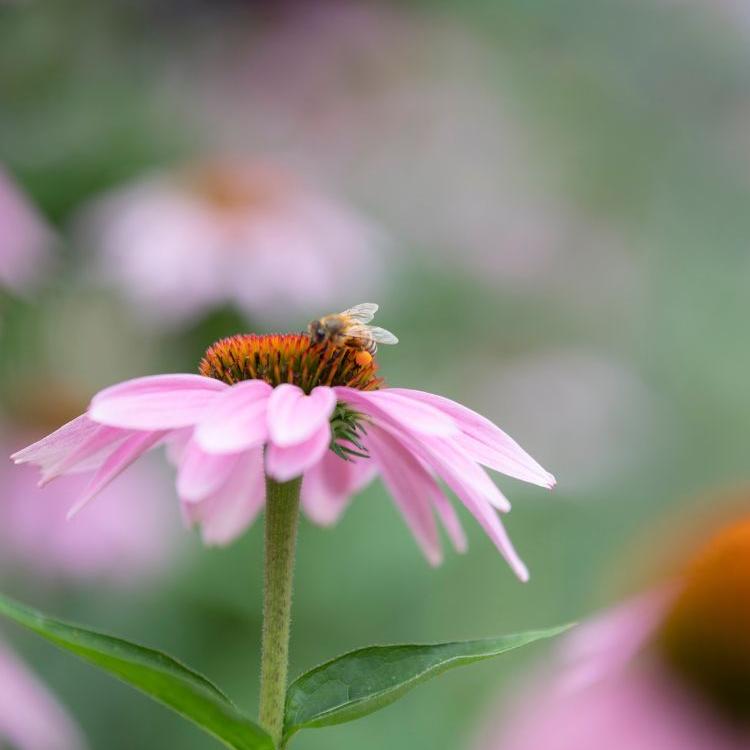
Pollinator Gardens on Campus

Pitt is home to multiple designated pollinator gardens. These gardens consist primarily of native plans species that support native pollinators year-round. 

Location: outside Posvar Hall along S Bouquet Street

Butterfly Bend was created in Spring 2025 by students as part of the GEOL 1333: Sustainability course. The group worked closely with Pitt Grounds Department to plan and design the garden, and secured funding from the Pitt Green Fund.

Learn more about Butterfly Bend

Location: behind Falk Laboratory School on Allequippa Street

This pollinator garden is part of “Falk Woods”, a green space behind the Falk Laboratory School, where students explore nature in each season, looking for signs of animals, collecting soil samples, and removing invasive plants from the trail.

Fanny Edel Falk Laboratory School is a private school affiliated with Pitt’s School of Education that seeks to guide students toward developing and maintaining a sustainable relationship with the natural world.

Location: intersection of Parkman Ave and O'Hara Street

The gardens were designed and created through a collaboration with the Conservation Club at Pitt and Pitt Grounds Department.

Learn more about Marlie Gardens

The Relearn Our Land Garden was created by students as part of the GEOL 1333: Sustainability course. The garden was created as an educational space that honors local Indigenous communities by showcasing plants that hold cultural significance for their medicinal or decorative properties.

Learn more about the Relearn Our Land Garden

Location: south patio of Posvar Hall

The Pollinator Garden on Clemente was created by students in June 2021 as part of the GEOL 1333: Sustainability course. The group worked closely with Pitt Grounds Department to plan and design the garden.

Learn more about the Pollinator Garden on Clemente

Location: in front of Posvar Hall on Schenley Drive

The Conservation Club at Pitt rejuvenated this pollinator garden, securing financial support from The Pitt Green Fund. 

Learn more about the Pollinator Garden on Schenley

Location: Thawl Hall on O'Hara Street